Rice cookers: the classic case
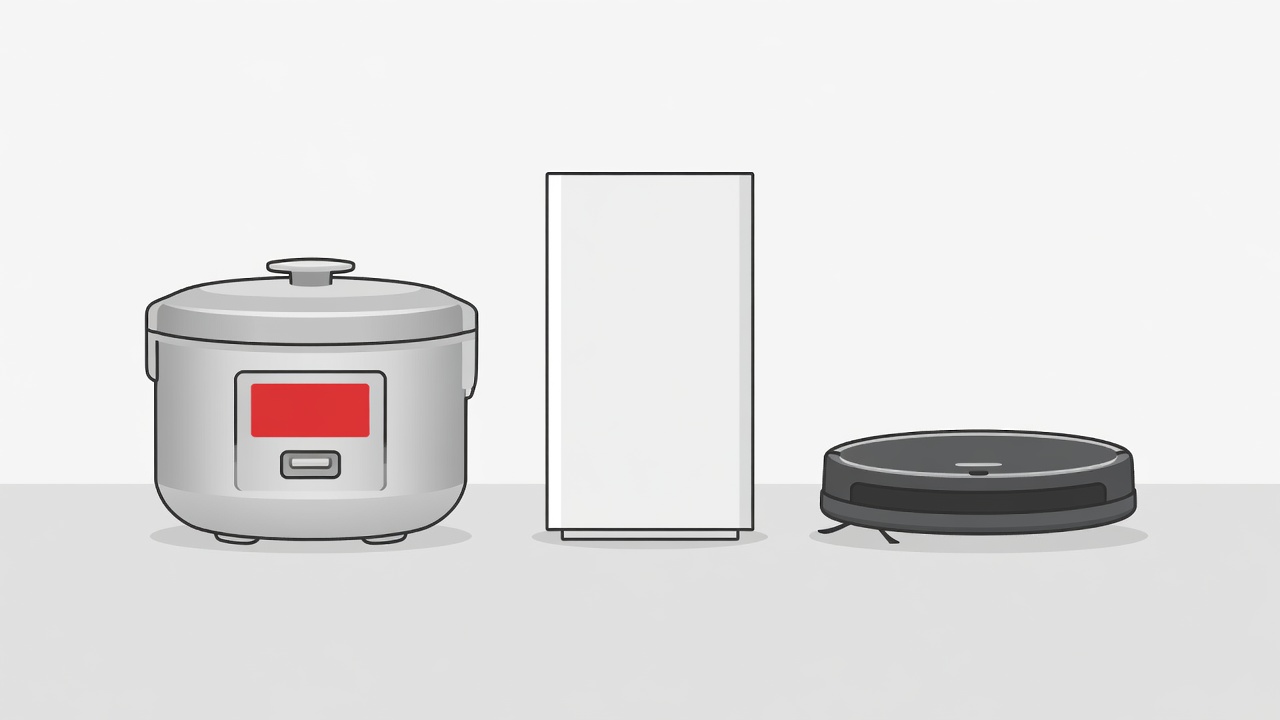
The rice cooker is the defining Asian home gadget. Japanese makers Zojirushi, Tiger and Panasonic refined induction heating (IH) and fuzzy-logic control, while Korea's Cuckoo specialises in pressure cookers tuned for short-grain and mixed-grain rice. Many travellers carry one home from Tokyo or Seoul as a long-term investment.
Here the details matter. Domestic Japanese models are built for 100 V. Plugged directly into a 220–240 V socket, they can fail instantly and may become a fire risk. Using one abroad requires a properly rated step-down transformer, and heating appliances draw a lot of power, so the transformer must be large. Both Zojirushi and Tiger sell export models designed for 220–230 V with English control panels, usually a better choice than converting a domestic model. Korean models built for 220 V are a closer match for much of Asia and Europe, but plug shapes still differ.
Air and water purifiers
Air purifiers are everyday tools in many Asian cities. South Korea's Coway and LG, Japan's Sharp with its Plasmacluster ion technology and Daikin, and China's Xiaomi all sell widely. The purchase that seems cheap can become expensive through filters: a purifier is a subscription to replacement filters, and those filters must be sold where you live.
Before buying an imported purifier, check that genuine filters are available locally and what they cost per year. Look for a CADR rating (clean air delivery rate) matched to your room size, and ignore marketing terms that lack measurable figures. Coway water purifiers in Korea are frequently rented with service visits included, a model that does not travel with the device.
Filter availability
Confirm local stock of genuine replacements before purchase.
Measured performance
Compare CADR and room size rather than descriptive claims.
Robot vacuums and connected cleaners
Chinese companies including Roborock, Dreame and Ecovacs now lead much of the robot vacuum market, often with self-emptying docks and mopping attachments. Their chargers are frequently universal, which makes them easier to import than kitchen appliances, but the app is the real gatekeeper. Mainland-market units may be locked to Chinese servers and app versions, limiting language options and features elsewhere.
Buy the global version, sold through official regional channels, and check that the app lets you choose your server region. Also consider privacy: camera-equipped models map your home, so review the maker's data policy and local data storage options.
For connected appliances, the server region is as important as the plug.Field note
Compact kitchen and living ideas
Japan's Balmuda turned the toaster into a design object with its steam-assisted model, and Muji sells deliberately simple small appliances that suit compact flats. Panasonic and Sharp make microwave combination ovens sized for small kitchens. These products are pleasant to use, but their value depends on voltage and service: a Balmuda bought in Japan is a 100 V appliance, and repairs outside Japan may be difficult.
For smart-home control, look for support for Matter, the cross-platform standard backed by major technology companies. Matter devices from Asian brands can work with several voice assistants and hubs, which reduces the risk of being tied to one regional app.
Our appliance rule of thumb
Import portable, USB-powered or universal-voltage devices with reasonable confidence. For mains appliances, especially anything that heats, prefer official export models or local purchase. Mains frequency (50 Hz or 60 Hz) can also affect motors and clocks in older designs. The admiration you feel in a Tokyo showroom is real; it is simply not a wiring plan.
- 04
Next: Signals Across Asia
Emerging trends and how far they travel.
- TABLE
Compare market power standards
Voltage, plugs and marks in one table.