Start with the charger
If there is one category where Asian manufacturers have changed everyday life, it is the wall charger. Gallium nitride (GaN) semiconductors allow higher power in a smaller body, and Shenzhen-based companies such as Anker, UGREEN and Baseus brought them to mainstream shelves quickly. In Japan, smaller brands such as CIO have built followings around especially compact designs suited to tight train commutes and small bags.
The useful question is not "how small is it?" but "what will I plug into it?" A single 65 W charger with USB Power Delivery (USB PD) can usually top up a laptop, a phone and earbuds in rotation, replacing three bricks. Check how the power splits when several ports are in use: a charger labelled 100 W may deliver far less to each device when all ports are busy. Manufacturers usually publish this split; if they do not, treat that as a warning sign.
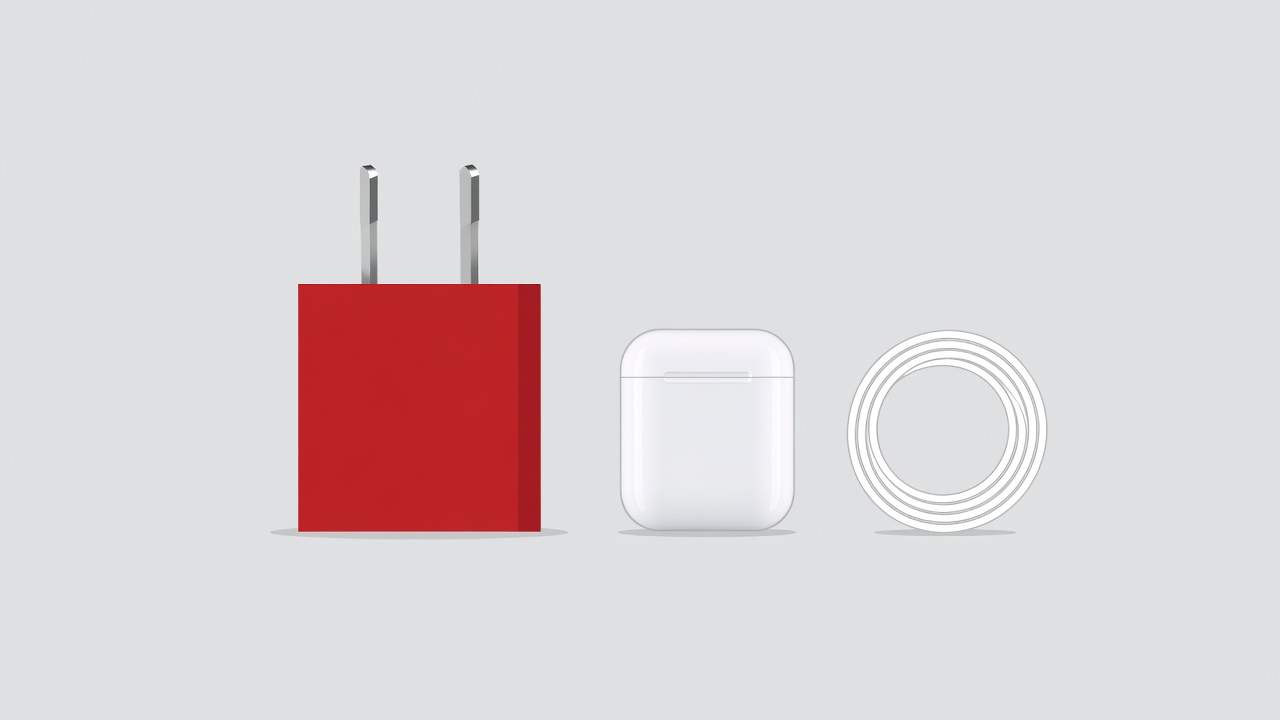
Plugs, voltage and safety marks
Most phone and laptop chargers accept 100–240 V, so they work across Asia with only a plug adapter. Japan and Taiwan use flat two-pin Type A sockets, Singapore uses three-pin Type G, and mainland China and South Korea use mixtures that include round-pin types. A charger bought in Tokyo will usually work in Singapore with a simple adapter, but read the label first.
Local safety marks tell you a product was certified for that market: PSE in Japan, KC in South Korea, CCC in mainland China and the Safety Mark for controlled goods in Singapore. A missing mark does not prove a product is unsafe, but a charger with no traceable certification and an unusually low price is the item we would leave on the shelf.
Check the input range
"Input: 100–240 V ~ 50/60 Hz" means a plug adapter is enough.
Look for traceable certification
A brand name, model number and recognised mark matter more than packaging claims.
Power banks and the airport
Power banks are among the most bought travel gadgets in Asia, and among the most regulated. Lithium batteries must travel in cabin baggage, not in checked luggage. Under common airline practice based on IATA guidance, packs up to 100 Wh are generally allowed, while 100–160 Wh usually needs airline approval. Several Asian carriers have introduced stricter rules, such as banning in-flight use of power banks, so confirm the current policy of your specific airline.
To convert, multiply capacity in amp-hours by nominal voltage: a 20,000 mAh pack at 3.6 V is about 72 Wh. Choose a pack with the watt-hour figure printed clearly; security staff in Tokyo, Seoul or Singapore may ask to see it. Magnetic packs that snap onto phones using the Qi2 standard are convenient, but they charge more slowly and run warmer than a cable.
Buy the power bank for the trip you take most often, not the expedition you might take once.Field note
Earbuds and audio
Sony's WF-1000X series, Samsung's Galaxy Buds and Xiaomi's Redmi Buds cover very different budgets, but share one hidden dependency: the phone in your pocket. Some features work best within one ecosystem. Samsung's higher-quality codec and automatic device switching favour Galaxy phones, and Sony's LDAC codec is supported on many Android phones but not on iPhones. If you use an iPhone, a premium Android-oriented pair may sound good while leaving features unused.
Companion apps also matter. A domestic-market version of a Chinese earbud may expect a mainland app store for firmware updates. Before importing, check that the companion app is available in your country and offers your language. The audio quality is only useful if you can keep the firmware current.
Compact cameras and small extras
Instant cameras such as Fujifilm's Instax line remain popular gifts from Japan, and Casio's digital watches are a reminder that useful pocket technology can be simple. For these items, film availability, battery type and repair options matter more than specifications. Instax film is sold widely, which makes it a safer purchase than a niche camera with proprietary media.
Our rule for pocket tech is plain: if a device needs a special cable, a regional app and a battery you cannot buy locally, it is a souvenir rather than a tool. That is fine, as long as you know which one you are buying.
- 02
Next: Useful Extras
Wearables, trackers and translators.
- FAQ
Questions about importing
Warranties, voltage and travel answers.